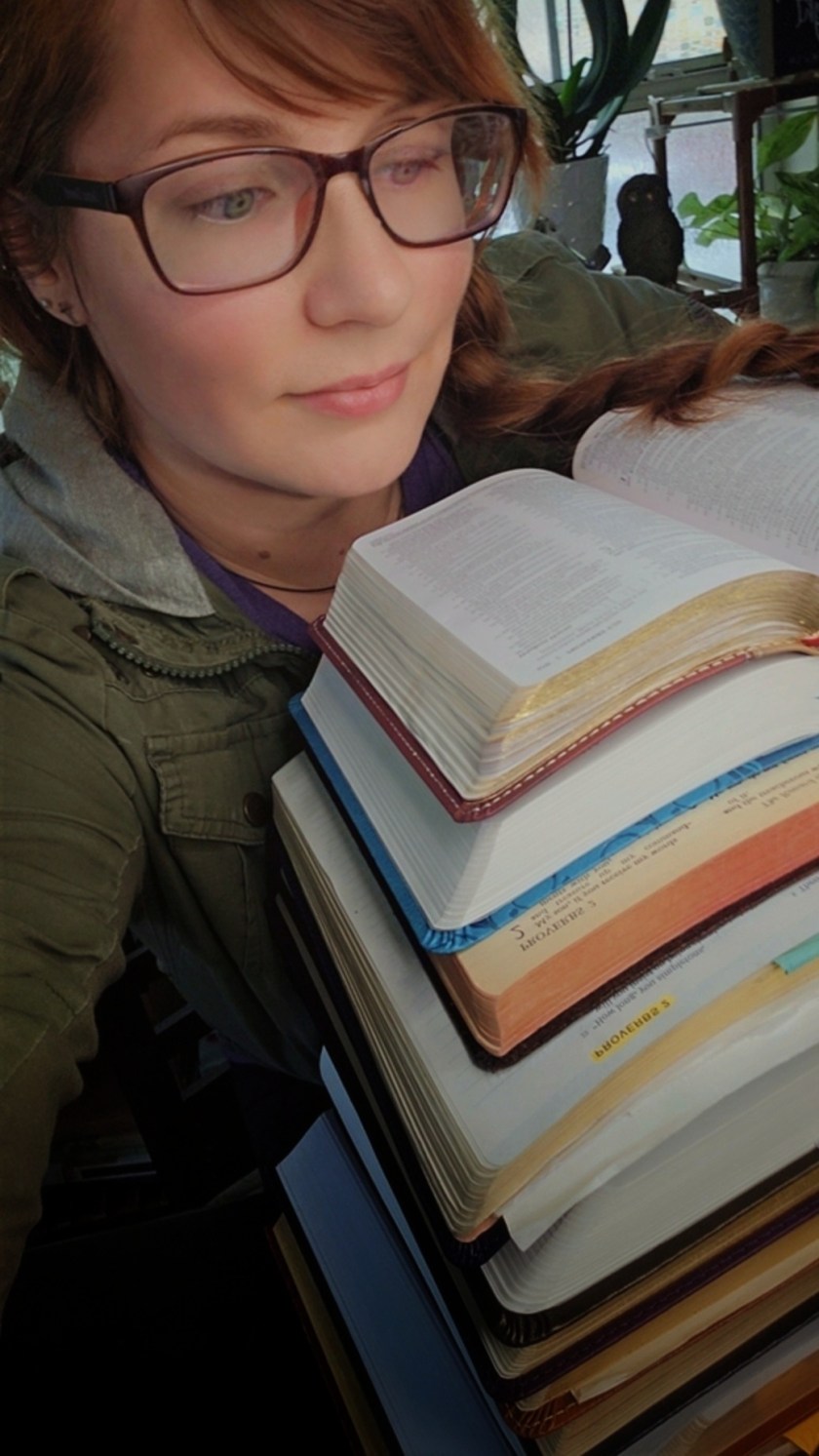
When I first started learning how to research for creative writing, I thought research meant I had to become a tiny sleep-deprived librarian with a stack of books, seventeen browser tabs open—minimum, a mug of thrice-reheated coffee, and a slightly haunted expression.
Which, to be fair, still happens sometimes.
Especially when I only meant to look up one tiny detail, and suddenly I’m forty-three minutes deep into the history of a doorknob, an elusive plant that only blooms once every ten years in Costa Rica, an isolated hospital policy, or a bespoke coffee table with dove-tailed joints and a hue of stain that was discontinued in 1926. This is exactly how research overwhelms us if we let it. It enters politely through the front door, asks one reasonable question, and then starts rifling through the cabinets and mixing up a batch of lemon meringue cookies.
But I’ve learned that research for creative writing is not the same thing as trying to shove an entire encyclopedia into a story and hoping the reader claps politely. Research is supposed to serve the writing, not tackle it in the hallway and steal its lunch money.For creative nonfiction especially, research helps us tell the truth more carefully. It gives our memories context, our scenes texture, and our claims a backbone. It reminds us that our stories don’t float in space. They happen in real places, among real people, inside real history, with real consequences. The goal isn’t to prove how much we know. The goal is to handle the story with such exacting care that the reader can trust us enough to follow.
So, if you’re a newer writer staring at a blank page, a half-formed idea, and maybe a Google search history that already looks certifiably suspicious—here are a few lessons. As always, please learn from my mistakes.
Before we begin, though, I feel like this post needs a tiny soundtrack. Not because research requires background music, but because if I’m going to accidentally overthink a doorknob for forty-three minutes, I might as well do it with ambiance.
Okay. Music selected. Snacks nearby. Browser tabs under questionable supervision. Let’s do this.
First: What Am I Even Looking For?
Before researching, I have to figure out what my project actually needs. This sounds obvious, but apparently my brain likes to skip this step and spiral directly into, “Let’s research the entire history of South Carolina railroads because one train whistle appears in paragraph three.”
No, brain. We are not doing that today.
So, the first question I ask is: What story am I really telling?
Not just the topic. The story.
For example, if I’m writing about grief, I probably don’t need to research every psychological theory ever written about grief from the dawn of time until next Tuesday. I may only need a few details that help one moment become clearer: what the room smelled like, what songs or Scriptures shaped that season, or what was blooming with life outside the windows while everything on the inside felt suffocatingly heavy.
Or maybe I’m writing a scene where unfinished craft pieces are scattered across a coffee table (not the same bespoke one mentioned above). I don’t need to research the complete history of yarn, wooden crosses, glue, grief, motherhood, and living room aesthetics. I may only need to understand what the image is doing in the story. Is it showing tension? Tenderness? Something incomplete?
A good research question keeps the flashlight beam from becoming a stadium light. Instead of asking, “What do I need to know about this whole topic?” I can ask what my reader needs in order to understand the scene, which details would make the moment feel more true-to-life, what I don’t know well enough to write responsibly, and what I’d be absolutely mortified to get wrong.
That last one is very motivating. Nothing humbles a writer faster than realizing she (or he) over-confidently described something (s)he has never actually seen, done, smelled, worn, cooked, planted, driven, or survived.
I also like to sort research into two piles: need-to-know and nice-to-know.
Need-to-know research affects the story. Nice-to-know research is interesting, sparkly, and dangerous because it whispers, “Come here. Spend four hours learning about Victorian spoon manufacturing.”
And maybe Victorian spoons are important. Maybe they’re not. We must be brave.
The trick is to let the project set the boundaries. Research should answer the questions the writing is actually asking—not every single question the Internet is willing to throw at us like confetti on New Year’s Eve.
Where Do I Find the Good Stuff?
The Internet is useful, but it’s also basically a giant junk drawer with glitter, expired coupons, actual treasure, and one clump of sticky mystery goo stuck to the bottom (or maybe that’s just mine).
So, I try not to stop at the first search result unless I’m just checking something simple, like the spelling of a name or the date of an event.
Better, stronger starting points include:
Library databases. University or public library databases are wonderful for scholarly articles, newspapers, biographies, history, literary criticism, and other sources that have been through more of a vetting process than “a guy with a blog and very strong opinions.” Depending on the library, you may find sources through databases like JSTOR, EBSCO, ProQuest, Academic Search Complete, or newspaper archives.
Books. I know. Shocking. Books are still helpful. *gasp!* A well-researched book, though, can save you from piecing together twenty questionable websites like a raccoon building a nest out of receipts.
Official websites. Museums, historical societies, universities, archives, government sites, and organizations connected to your topic can be very helpful. If I’m writing about a place, I might look for relevant local history pages, maps, public records, photographs, visitor guides, or archive collections.
Primary sources. These are the good crunchy bits. Letters, journals, interviews, speeches, photographs, newspaper articles from the time period, maps, recipes, church records, family documents, and firsthand accounts can give your writing life.
People. Interviews can be gold. Sometimes one person’s memory of how a moment sounded or felt will give you more usable detail than ten articles. Of course, people remember imperfectly, so interviews still need care. But they can give you emotional truth, language, and sensory details that a database never will.
Your own observation. Walk the ground when you can. Touch the fabric. Listen to the train. Smell the old wood, the bread, the hospital hallway, the rain on hot pavement. Creative writing research is not only “facts.” Sometimes it’s simply noticing what’s already there instead of hurrying past it.
One practical tip: use specific search terms.
Instead of searching “old houses,” search “1920s Charlestonian bungalow floor plan” or “historic downtown Charleston coastal colonial architecture.”
Instead of “grief essay,” try “creative nonfiction essay grief memory mother.”
The more specific the question/phrasing, the better chance you have of finding something useful before your browser tabs begin multiplying like the sourdough starter currently on my kitchen counter.
Is This Source Trustworthy… or Just Wearing a Lab Coat?
Not every source deserves to be invited into your writing.
A credible source usually has a clear author, a reputable publisher or organization, evidence for its claims, and a date that makes sense for the topic. If I am writing about something medical, legal, historical, scientific, or theological, I need to be extra careful. A random blog post from 2009 written by “TruthSeekerMango74” may not be the foundation on which I want to build my scene.
I ask who wrote it, what makes them qualified, where it was published, whether it’s current enough for my topic, whether it cites evidence, and whether it’s trying to inform me, persuade me, sell me something, or scare me into buying twelve jars of emergency mushroom powder for my coffee.
That last one may be oddly specific, but we are talking about the World Wide Web here.
Credibility matters, but so does appropriateness. A source can be trustworthy and still not belong in your piece.
For example, a scholarly article about grief may be credible, but if I am writing a personal essay about sitting beside my grandmother’s hospital bed, that article may not belong directly in the scene. It might help me understand something in the background, but it may not fit the tone, purpose, or emotional movement of the piece.
On the other hand, an old family recipe card might not be “scholarly,” but it could be perfect for a memoir scene about inheritance, memory, or the way love gets written in teaspoons and butter stains.
Research isn’t just gathering information. It’s discernment: choosing what serves the integrity of the piece and what only makes me sound like I want a gold star for knowing “all the things.”
And, listen. I do enjoy a gold star. I’m not above getting excited over stickers. But the story still has to come first.
How Do I Use Research Without Dumping the Whole Junk Drawer on My Reader?
This is where I have to lovingly remind myself: just because I researched it does not mean the reader needs to suffer through all of it.
Research should work like seasoning. Enough salt brings out the flavor. Too much salt makes everyone panic.
In creative writing, research usually belongs under the surface. It helps me write with confidence, even when only a small piece of it appears on the page. If I know the layout of a room, the weather on a certain day, the right name for a plant, or the historical context around an event, my writing becomes steadier. But I don’t have to stop the story and announce every fact like I’m giving a PowerPoint presentation to three tired people and a variegated ficus.
Not ten details.
One. Good. Detail.
A reader doesn’t need a full history of sourdough to understand a kitchen scene. But they may need to see the flour on the counter, the jar of starter bubbling like it has personal opinions, and the way the dough resists at first before softening under your hands.
Instead of saying, “the plant,” I might say “the rosemary bush.” Instead of saying “the old neighborhood,” I might name the cracked sidewalk, the train line, the live oak roots, the porch paint, or the humidity pressing its face against the windows. Tiny accurate details make the world feel lived in.
For creative nonfiction, those details also help protect the truth. Memory is powerful, but it isn’t always neat. Research helps us honor people, places, and events without reshaping them just because a cleaner version would be more convenient. Sometimes the facts complicate the story, and that isn’t always a bad thing. Sometimes the complication is where the grace is.
Giving credit in creative writing can look different from academic writing. We usually do not use parenthetical citations in the middle of a memoir scene. Nobody wants to read, “I stared out the window at the rain (Smith 42) and wondered if grief had a sound.”
Please no. Not ever. Just… no. Hard pass. Don’t do it.
But we can (and should) still give credit.
We can use an author’s note, an acknowledgments section, a works consulted list, hyperlinks in a blog post, or a brief mention in the prose if it flows naturally. For example: “According to the museum archive…” or “In an interview, my grandmother remembered…” or “A local newspaper from that year described…”
If a source shaped the piece, credit it. If a line or image came from somewhere else, don’t pretend it floated down from the heavens into your very original notebook. Research should make us more careful, not sneakier.
Where Can I Find More Information?
Here are a few resources I would recommend for creative writers who want to research without losing the pulse of the story:
The Art of Creative Research: A Field Guide for Writers by Philip Gerard
This book is especially helpful because it treats research as part of the creative process, not as a punishment for choosing a writing major. Gerard shows how observation, archives, interviews, and curiosity can feed the imagination and strengthen the work. University of Chicago Press: The Art of Creative Research
Tell It Slant: Creating, Refining, and Publishing Creative Nonfiction by Brenda Miller and Suzanne Paola
This is a strong resource for creative nonfiction writers because it focuses on voice, structure, truth-telling, and craft. It is useful for writers who want to tell true stories beautifully without flattening them into plain reports. Tell It Slant, Third Edition
Creative Nonfiction, founded by Lee Gutkind
This site is helpful for reading examples of the genre and seeing how researched true stories can still feel vivid, personal, and artful. Their phrase “true stories, well told” is a good reminder of the balance creative nonfiction writers are trying to keep. Creative Nonfiction
Purdue OWL: Evaluating Sources
This is a practical resource for checking whether a source is credible before using it. It is especially helpful when you need a simple reminder to slow down and ask who wrote the source, where it came from, and whether it actually belongs in your project. Purdue OWL: Evaluating Sources
The sources I consulted while writing this post are the ones listed above.
And my final super unofficial advice?
Research bravely. Research with curiosity, humility, and snacks at the ready.
But don’t let research strong-arm the story. Let it be the scaffolding, not the stained glass. Let it hold the piece steady while the light shines through.
…and whenever you do a browser search for anything that might raise red flags for a writing project, feel free to cavalierly add “…because I’m a writer” at the end of the query so the NSA automatically understands the innocent motives behind your search for “can a person look morally normal while buying rope, lye, and a decorative porch goose that’s wearing a rain hat and galoshes?”
Happy researching!

